The Human Firewall: Why Code Cannot Replace Context
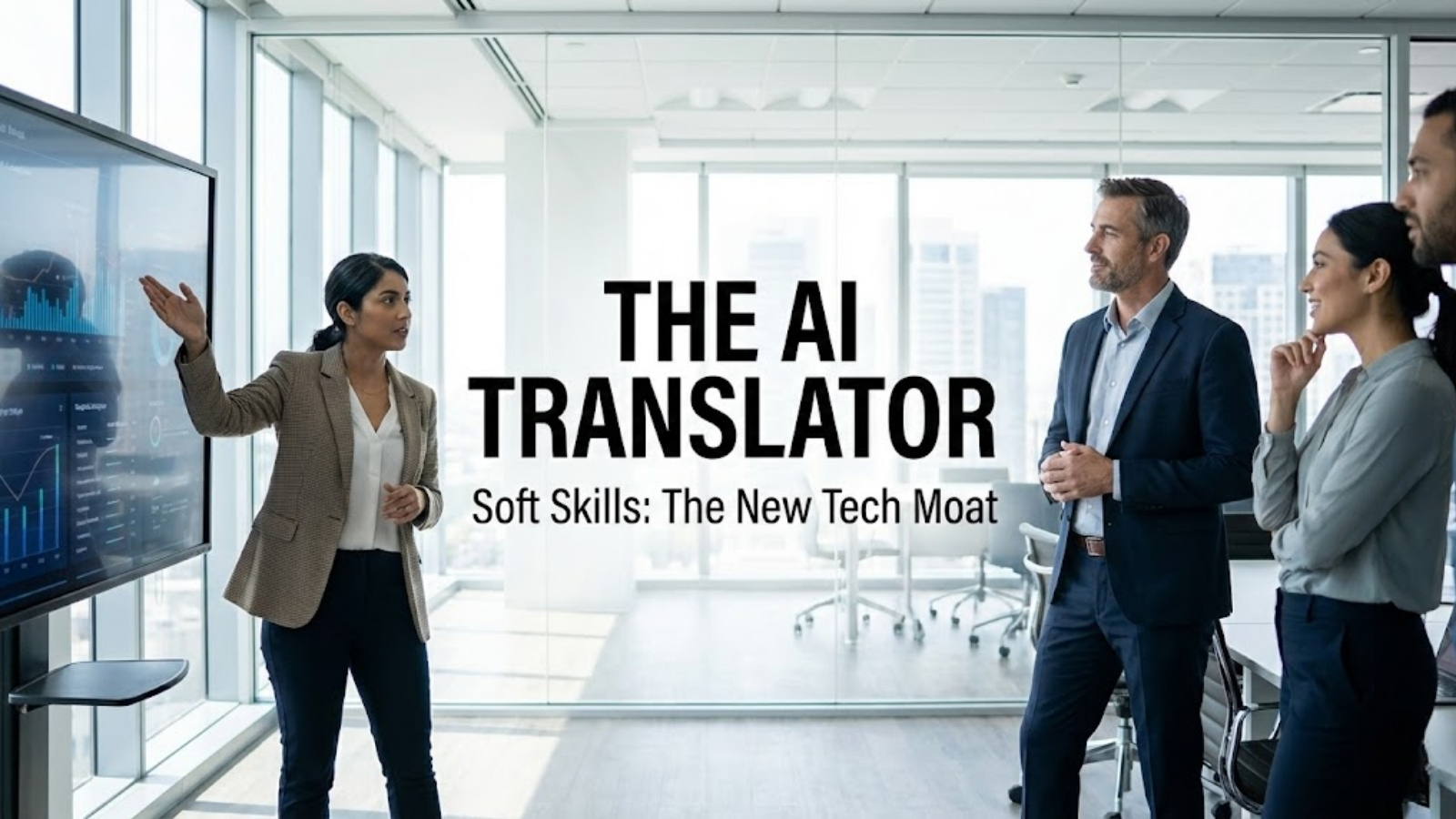
Soft skills are rapidly becoming the primary differentiator between a mid-level data scientist and a Chief AI Officer in the modern tech ecosystem. For years, the artificial intelligence sector operated under the myth of the “lone genius”—the hooded engineer coding in a basement who changes the world. That narrative is dead. As AI models become commoditized and accessible via APIs, technical proficiency is no longer a moat; it is merely the price of admission. The real value has shifted to the “translation layer”—the ability to bridge the gap between complex algorithms and business value.
In 2026, an engineer who can optimize a neural network but cannot explain why it matters to a non-technical stakeholder is a liability. As AI integrates into sensitive sectors like healthcare and finance, the industry is prioritizing professionals who possess the interpersonal intelligence to navigate ethical minefields and cross-functional friction.
The Translator’s Premium
Why is the market placing a premium on these intangible traits? Because the biggest bottleneck in AI adoption is not technology; it is trust. Soft skills allow an engineer to de-risk a project. When you can articulate the limitations of a model to a CEO or manage the expectations of a product manager, you transform from a cost center into a strategic partner.
-
Communication: This is the killer app. You need to explain the “black box.” If you can translate variance and bias into “risk” and “opportunity,” you control the narrative.
-
Persuasion: Great models die in PowerPoint presentations. The ability to sell your solution to skepticism is what gets projects funded.
The Collaborative Engine
AI is a team sport. The era of the full-stack data scientist doing everything from data cleaning to deployment is fading. Today’s pipelines are complex, requiring collaboration between MLOps engineers, ethicists, and domain experts. In this environment, soft skills like empathy and active listening are the grease that keeps the machine running.
Recruiters at top firms are increasingly testing for “cultural add” rather than just “cultural fit.” They are looking for people who can de-escalate conflicts when a model fails in production or mentor junior developers without condescension. A brilliant jerk breaks the team; a collaborative average coder builds the product.soft skills
Also Read : Women in AI: The Untapped Trillion-Dollar Opportunity
The Ethics of Intelligence
Perhaps the most critical area where human judgment reigns supreme is ethics. An algorithm does not care if it discriminates; a human must. Understanding the societal impact of your code requires a level of critical thinking that Python cannot teach. Organizations like the AI Now Institute have repeatedly highlighted that technical solutions to social problems often fail without human nuance.
Professionals who can spot bias in a training dataset or push back against a profitable but unethical feature are becoming the industry’s risk management policy. This ethical awareness is one of the most valuable soft skills you can cultivate, protecting your company from reputational suicide.
The Hiring Reality
If you look at the hiring trends for 2026, the signal is clear. Technical interviews are standardizing, but behavioral interviews are getting harder. Companies are asking: “Tell me about a time you explained a technical failure to a client.” They are probing for resilience, adaptability, and emotional intelligence.
To stay competitive, you must treat your soft skills with the same rigor as your technical stack.
-
Present Often: Force yourself to speak in front of non-technical audiences.
-
Write Clearly: Documentation is communication. If your README is confusing, your code is useless.
-
Listen More: In meetings, focus on understanding the business problem before proposing a technical solution.
Automation is coming for the rote tasks. It can write code, it can optimize parameters, and it can generate reports. But it cannot empathize with a frustrated user, it cannot negotiate a deadline, and it cannot inspire a team. In the end, the most future-proof asset in your portfolio isn’t your knowledge of PyTorch; it is your mastery of soft skills. The machines can handle the logic; you need to handle the humans.
Also Read : AI in Government Jobs: How to Modernize the World’s Largest Employer