The Public Sector Pivot: Why Bureaucracy Is Betting on Code
AI in government jobs represents the most significant overhaul of the public sector since the invention of the filing cabinet. For decades, the narrative around government employment has been one of stagnation, red tape, and legacy systems that still run on COBOL. However, a massive shift is underway. Driven by the urgent need to modernize infrastructure and the pressure to deliver services at the speed of Amazon, governments worldwide are aggressively recruiting technical talent. This isn’t just about digitizing forms; it is about fundamentally restructuring how the state interacts with its citizens.
The GovTech market is exploding, and the demand for professionals capable of navigating AI in government jobs is outpacing supply. From the Department of Defense looking for autonomous systems engineers to local municipalities needing data scientists to optimize traffic flows, the public sector has become an unexpected battleground for top-tier tech talent. The allure isn’t just stability anymore; it is the scale of the impact. Optimizing an ad algorithm increases clicks; optimizing a public health algorithm saves lives.
The Sectors Driving the Demand
Where is the money actually flowing? The implementation of AI in government jobs is not uniform. It is concentrated in high-stakes verticals where efficiency is a matter of national security or public safety.
1. Defense and Intelligence This is the tip of the spear. The military has long been a driver of innovation, but the focus has shifted to software. Roles here involve processing satellite imagery, enhancing cybersecurity perimeters, and developing autonomous logistics systems.
2. Healthcare and Bio-Surveillance The post-pandemic world has forced a rethink of public health. Governments are hiring data scientists to build predictive models that can track disease outbreaks in real-time. This sector offers some of the most technically challenging AI in government jobs available today.
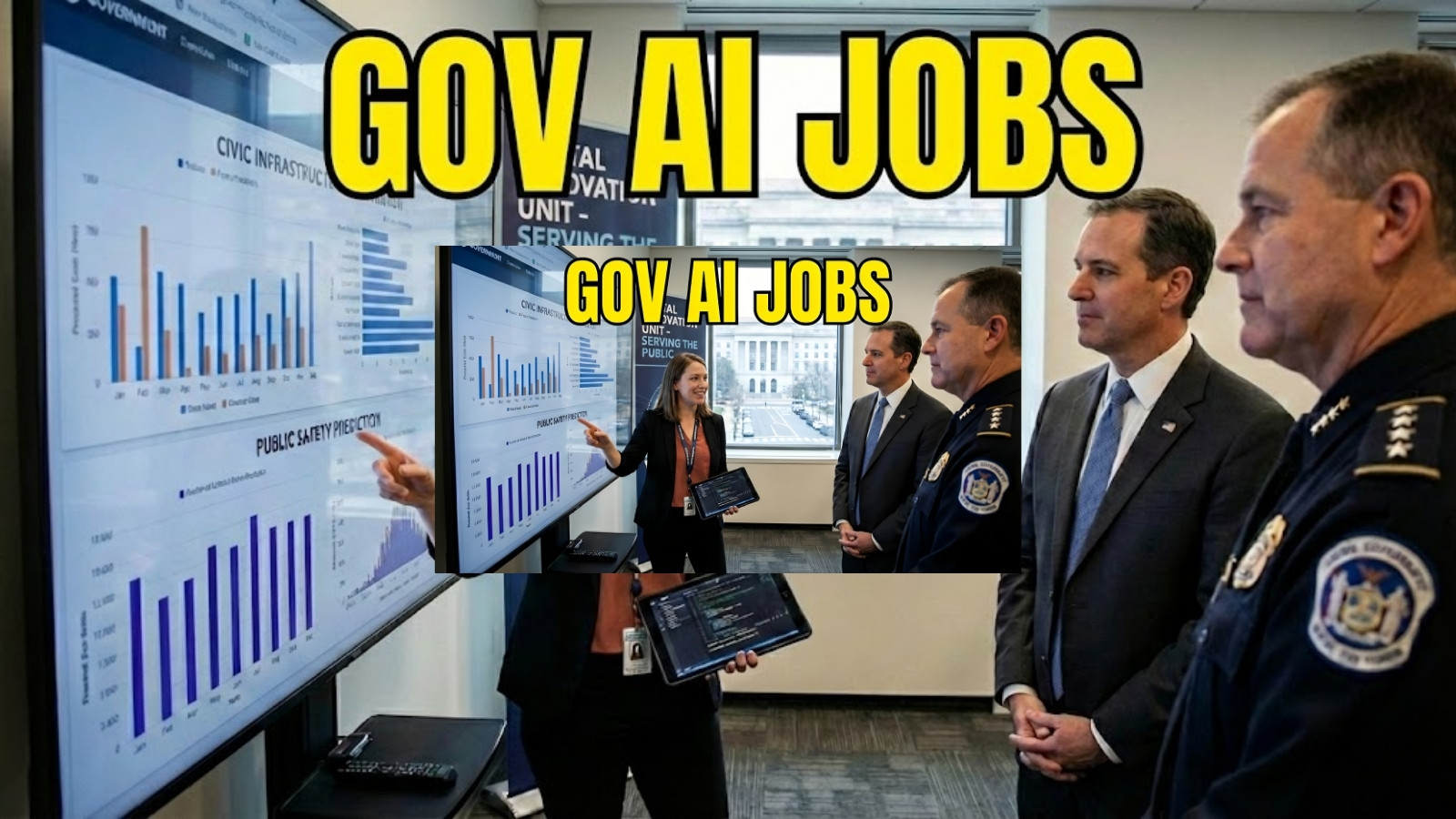
3. Civic Infrastructure Smart cities are no longer a concept; they are a hiring mandate. Transportation departments are using computer vision to manage congestion, while utilities are using machine learning to predict grid failures before they happen.
Also Read : Earn in AI: Why Engineers Are Leaving Big Tech for Startups
The Skill Gap: What Uncle Sam Wants
The requirements for these roles differ significantly from the private sector. While a startup might prioritize “moving fast and breaking things,” the public sector prioritizes robustness and explainability. To succeed in AI in government jobs, you need a specific toolkit.
-
Explainable AI (XAI): You cannot deploy a “black box” model to deny a citizen’s loan application. You need to explain why the decision was made.
-
Data Security: Governments handle sensitive data. Proficiency in cybersecurity protocols is often as important as your ability to tune a hyperparameter.
-
Legacy Integration: You won’t always have a clean API. You need the engineering grit to connect modern ML pipelines to legacy databases.
If you are looking for these openings, major portals like USAJOBS have started creating dedicated tracks for data science and AI, signaling a structural change in how the government hires.
The Hiring Reality
The hiring process for AI in government jobs is notoriously slow, but it is changing. Agencies are utilizing “Direct Hire Authorities” to bypass traditional bureaucratic hurdles for technical roles. They realize that they cannot wait six months to hire an engineer who has a competing offer from Google.
Furthermore, the compensation gap is closing. While base salaries may still trail Big Tech, the total package—including unparalleled job security, federal benefits, and the potential for student loan forgiveness—makes these roles increasingly competitive.
The stereotype of the sleepy government worker is dying. As citizens demand digital-first experiences, the public sector has no choice but to innovate. The rise of AI in government jobs is creating a unique window for mission-driven technologists. If you want to work on datasets that cover entire populations and build systems that define the infrastructure of the future, the government is hiring. And for the first time in a long time, the work is actually exciting.
Also Read : Non Tech Background? Here is How to Crack the $150k AI Job Market