The AI Career Reality Most People Get Wrong
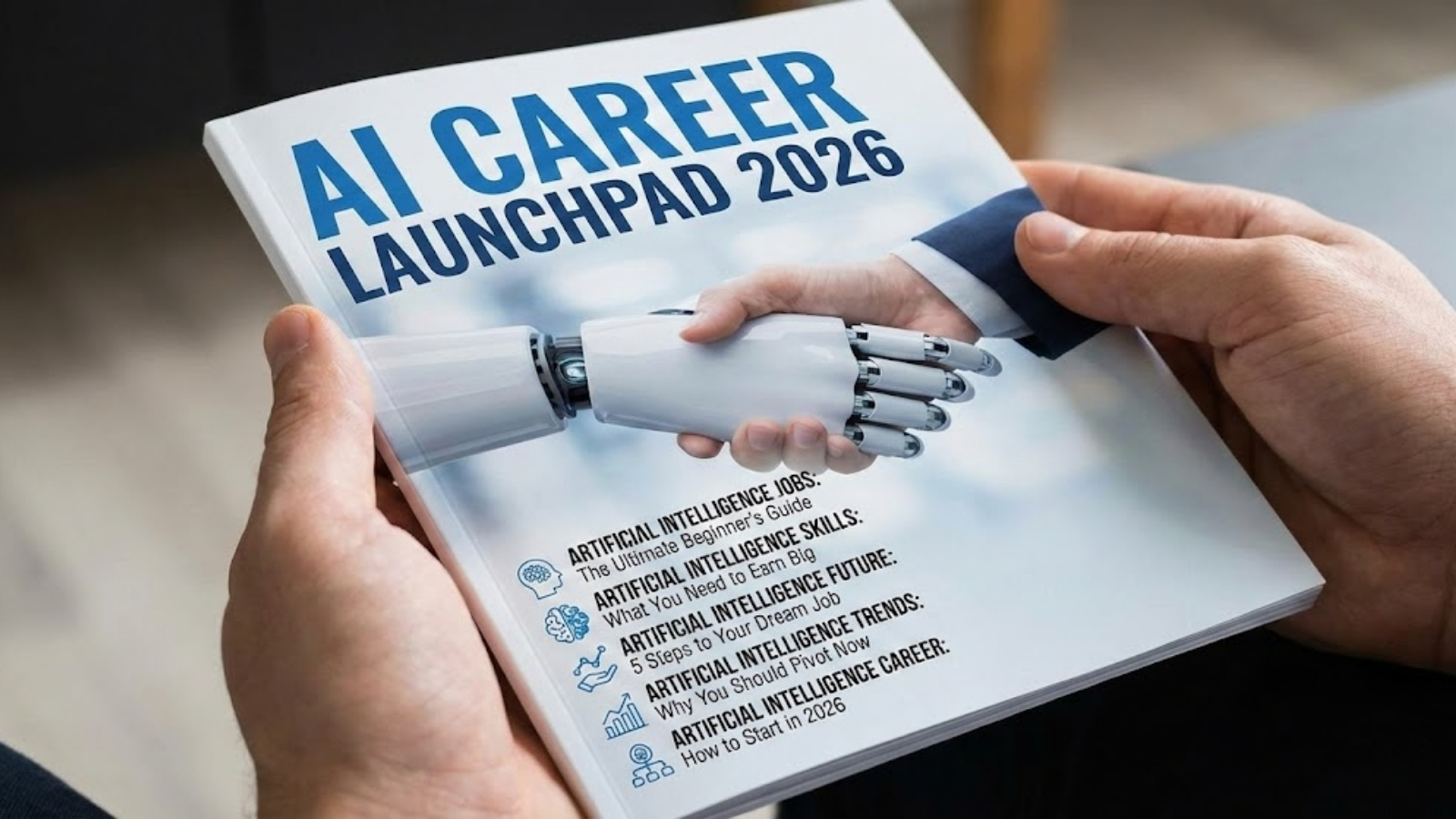
Artificial intelligence is the most accessible high-paying career field that most people are still treating like it requires a PhD.
Most entry-level AI jobs do not require technical skills, coding knowledge, or an engineering background. Many remote roles focus on guiding AI tools, checking their outputs, or completing tasks like data labeling, prompt writing, and content refinement. OpenPR Employers provide basic training. Free AI tools allow candidates to practice before applying.
The US Bureau of Labor Statistics projects computer and information research roles to grow 20% between 2024 and 2034. Fortune Business Insights That is seven times the average growth rate across all occupations. AI and machine learning are expected to create approximately 12 million more jobs than they replace. AI job opportunities will require almost 97 million specialists in the AI industry. Superframeworks
The path from no experience to a paid artificial intelligence role is not a four-year detour through a computer science degree. It is a sequence of specific steps that most people are not taking because nobody told them the steps exist.
Why Most People Underestimate This Field
A career in artificial intelligence is no longer reserved for PhD holders. There are clear entry points for both technical builders and non-technical professionals who want to work with AI tools. AI career opportunities are growing far beyond traditional tech companies. BetterCloud
In 2026, thousands of new remote roles have emerged that focus on practical, everyday AI use rather than technical development. These include AI content assistants, chatbot testers, remote research analysts, AI data labelers, customer experience reviewers, and more. What makes these roles particularly attractive is that they often require only basic digital skills, good communication, and a willingness to learn. OpenPR
The career that most people think they cannot access is actually sitting in their existing domain expertise — they just have not been told how to frame it.
Also Read : How an AI Career in 2026 Rewards Learning to Learn Over Every Other Skill
The 7 Entry-Level Artificial Intelligence Roles Available Without Experience in 2026
These seven roles are actively hiring candidates with no previous artificial intelligence experience. Each has documented demand, accessible entry requirements, and a clear path to higher-paying opportunities.
AI Data Annotator
Data annotation is the entry point that feeds every artificial intelligence system. Annotators label images, categorize text, review audio transcriptions, and provide the structured human feedback that allows AI models to learn. The work requires strong attention to detail and clear thinking — not technical background.
Pay rates for AI data annotators run $30 to $100 per hour depending on role type and specialization. Companies need help with tasks like reviewing outputs from AI, testing features, looking for bias, checking accuracy, and ensuring security and compliance. These tasks require clear thinking, curiosity, and attention to detail rather than deep technical knowledge. Verified Market Research Scale AI, Appen, Labelbox, and Prolific are actively hiring without experience requirements.
AI Content Reviewer and Quality Evaluator
AI content reviewers evaluate AI-generated outputs for accuracy, safety, and quality. They identify hallucinations, flag harmful content, assess factual correctness, and rate response quality across dimensions like helpfulness and honesty. This is the role that major AI labs — OpenAI, Anthropic, Google DeepMind — rely on to improve their models.
The role requires good judgment and domain knowledge in at least one area — not technical AI expertise. Entry is through platforms like Remotasks, Scale AI, and Prolific, as well as direct contractor roles posted on company career pages.
Prompt Engineer
Not all AI work is technical, and creatives can also participate. Look for roles that center around writing prompts, reviewing outputs from generative AI, and improving communications. Remote freelance platforms like Upwork and Fiverr make it easy to market yourself, even if you’re a complete beginner. Verified Market Research
Entry-level prompt engineering roles without deep technical background start at $50,000 to $80,000 — one of the fastest paths to higher compensation for candidates who build demonstrated expertise and document their work publicly.
AI Customer Experience Specialist
Customer-facing artificial intelligence applications — chatbots, virtual assistants, support automation — require human oversight, quality monitoring, and continuous improvement. AI customer experience specialists review AI-generated customer interactions, identify failure patterns, and improve response templates.
The role combines customer service instincts with AI quality judgment — one of the most accessible entry points for candidates from service-adjacent backgrounds who want to move into the AI field.
AI Research Assistant
Research assistants supporting AI projects collect, clean, and structure data; run literature reviews; summarize research papers; and support the evaluation work that research teams need to run efficiently. Entry requirements typically include a bachelor’s degree in any field plus demonstrated interest in AI — documentable through a portfolio, relevant coursework, or visible community participation.
AI Training Specialist
Over 35,000 AI developers use platforms like Prolific to recruit AI training specialists, and Indeed lists AI Training Specialist roles in New York and San Francisco with no experience requirements and competitive pay. CompaniesHistory This role provides the most direct exposure to how AI systems actually learn — making it one of the highest-leverage entry points for candidates planning to go deeper into the artificial intelligence field over time.
Junior Software Engineer With AI Focus
Entry-level technical artificial intelligence roles in the US typically start between $90,000 and $130,000, depending on location, company size, and technical depth. BetterCloud For candidates with basic Python skills, junior software engineer roles at AI companies are one of the highest-paying entry points available without a graduate degree.
Building a GitHub portfolio with real projects will do more for your AI job search than any certificate on its own. BetterCloud Two to three deployed projects substitute for a degree requirement in many hiring processes.
Also Read : How Networking in AI Gets You Hired Faster Than 1000 Job Applications
The Skills That Open the Most Artificial Intelligence Career Doors Without Prior Experience
Python Fundamentals
Python is the most important single skill for any candidate planning to move into technical artificial intelligence roles from a non-technical background. Learn Python and foundational data tools like NumPy, pandas, and SQL. Complete 2 to 3 micro-projects such as data cleaning, visualizations, and simple regressions. Get familiar with cloud platforms like AWS and Azure and how AI models are deployed at scale. Appverticals
Free resources that work: Python.org’s beginner tutorial, freeCodeCamp’s Python course, and Kaggle’s Python micro-course.
AI Tool Literacy
The candidates who stand out in non-technical artificial intelligence hiring are the ones who have demonstrably used AI tools to do something real. Building a portfolio of documented AI tool applications — a workflow you automated, a process you improved, a content system you designed — provides visible evidence of practical capability.
Start an AI swipe file today: a simple document where you save every prompt, output, and AI interaction that produced something genuinely useful. That file becomes your personal training data for working with AI more effectively over time. BetterCloud
Domain Expertise Framing
AI isn’t just something happening inside research labs anymore. It’s changing how lawyers draft contracts, how nurses organize patient information, how marketers shape campaigns, and how supply chain managers predict demand. BetterCloud
Domain expertise combined with AI tool literacy creates the diagonal career trajectory that commands premiums and faces minimal competition. Nurses who understand clinical documentation and learn to evaluate medical AI outputs are not competing with general AI candidates. They are in a category of one.
Data Literacy
The ability to read a dataset, understand what it represents, identify quality issues, and communicate insights clearly — without complex statistical analysis — is one of the most demanded and least celebrated skills in the artificial intelligence field. Candidates who develop data literacy move to higher-paying opportunities faster than those who do not.
Also Read : AI Engineer Career: 7 Brilliant Skills to Land a $150K US Job
The 90-Day Roadmap From Zero to First Artificial Intelligence Paycheck
Days 1 to 30 — Foundation and First Application
Learn Python basics using free resources. Complete one micro-project. Apply for annotation and quality evaluation roles on Scale AI, Appen, and Prolific. These applications do not require a portfolio — they require a passing score on a skills assessment. The first paycheck in this field often comes from these project-based platforms before any resume-based application succeeds.
Days 31 to 60 — Portfolio and Visibility
Build a second micro-project and document it publicly. Write a LinkedIn post about what you built and what you learned. Follow researchers and practitioners on LinkedIn and X, read the Hugging Face blog and Anthropic’s research updates, and subscribe to newsletters like The Batch from DeepLearning.AI. BetterCloud
Days 61 to 90 — Targeted Applications and Community
Apply to three to five entry-level roles per week using Indeed, Built In, and Wellfound. Monitor the careers pages of AI-focused companies — OpenAI, Anthropic, NVIDIA, Hugging Face — for new entry-level postings. Join one AI community and participate genuinely.
Attending industry events, joining online community forums, and discussing with professionals in the field will get you noticed and help you find opportunities where degrees aren’t needed. Superframeworks The candidates who move from application to interview in AI consistently report that a warm introduction from a community connection converted a cold application into a conversation.
The path from no experience to a paid role in 2026 is not mysterious. It rewards the candidates who start before they feel prepared and build while they are still learning.
Frequently Asked Questions
1. Can you get a job in artificial intelligence with no experience in 2026?
Yes. Data annotation, AI quality evaluation, prompt engineering, and AI customer experience roles actively hire candidates without prior experience. Most entry-level AI jobs require attention to detail and willingness to learn — not technical background, according to 2026 career data.
2. What is the fastest way to start earning in artificial intelligence with no background?
Apply to project-based platforms like Scale AI, Appen, and Prolific for annotation and quality evaluation work. These platforms offer paid tasks without resume-based applications and provide initial artificial intelligence experience that opens doors to higher-paying roles.
3. Do you need a degree to start an artificial intelligence career in 2026?
Not for most entry-level roles. Most entry-level AI jobs don’t require a degree. They focus more on growing practical experience and AI skills through AI projects. Superframeworks A portfolio of AI projects and documented tool experience substitutes for degree requirements in many hiring processes.
Which entry-level artificial intelligence role fits your background most? Drop it in the comments.