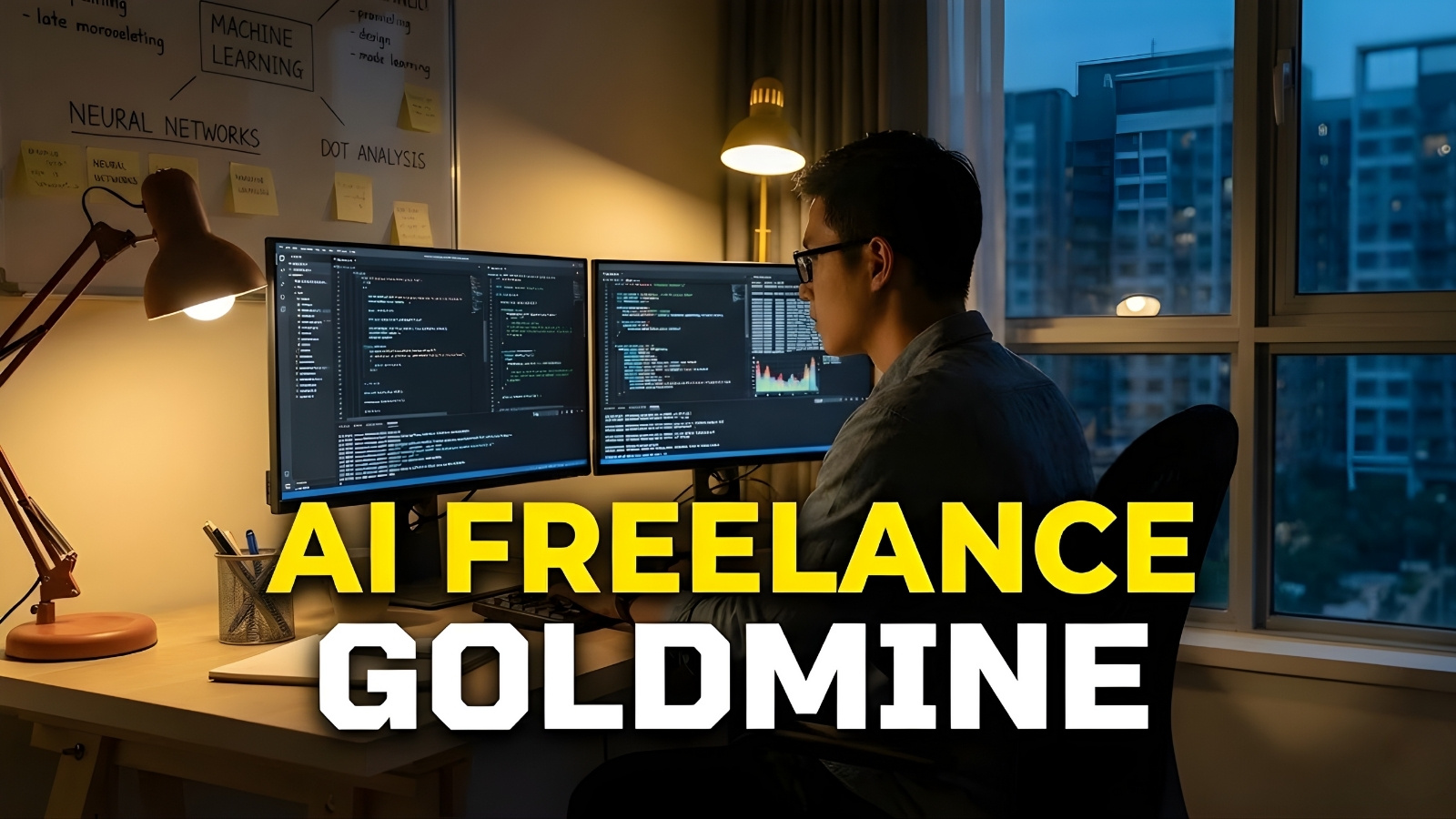
The Rise of the Algorithm Mercenary
freelancing in AI : The era of the “company man” in Silicon Valley is fading. While Big Tech layoffs dominate the headlines, a quieter, more lucrative revolution is happening in the shadows. We are witnessing the rise of the “Algorithm Mercenary.” As artificial intelligence reshapes industries from Wall Street finance to Hollywood production, the demand for specialized talent has outpaced the supply of full-time employees. This imbalance has created a massive opportunity for freelancing in AI, turning what used to be a side hustle into a career path that often pays better than a Senior Engineer role at Meta.
For the tech professional in 2026, the calculus has changed. Why trade your time for a fixed salary and stock options that might go to zero, when you can charge premium hourly rates to the highest bidder? From startups in Austin desperate to implement LLMs to multinational corporations in New York needing predictive analytics, companies are aggressively outsourcing to specialized freelancers.
The Economics of Independence
Let’s talk numbers, because that is what matters. In the US market, the disparity between full-time compensation and contract rates is widening for niche skills. A Machine Learning engineer might earn $180,000 a year. However, professionals who master the art of freelancing in AI are frequently commanding rates between $150 and $300 per hour.
This isn’t just about flexibility; it is about leverage.
-
Arbitrage: You can live in a lower-cost area while billing New York or San Francisco rates.
-
Diversification: Instead of relying on one employer who might lay you off, you have five clients. If one churns, you still have 80% of your income.
-
Speed: You learn faster. Working on five different stacks in a year forces a rate of adaptation that a corporate job simply cannot match.
The Platforms: Where the Deals Are Made
If you are serious about freelancing in AI, you need to know where the market clears. Not all platforms are created equal.
-
Upwork: The volume leader. Good for building a reputation, but you often compete on price initially.
-
Toptal: The elite club. They claim to accept only the top 3% of freelancers. If you get in, the rates are significantly higher, and the clients are usually Fortune 500 companies.
-
Boutique Agencies: Many high-end AI freelancers bypass platforms entirely, building direct relationships with VC firms who need technical due diligence.
Also Read : Hiring for AI Roles: Which Tech Giants Are Winning the Talent War?
The Skill Stack That Sells
To succeed in this market, “knowing Python” is not enough. The market for freelancing in AI rewards specialization. Generalists get commoditized; specialists get paid.
-
The Builders: Companies need people who can actually deploy models. Familiarity with Docker, Kubernetes, and AWS is just as important as knowing TensorFlow.
-
The Fixers: Natural Language Processing (NLP) is currently the hottest vertical. If you can fine-tune a LLaMA model for a law firm, you can practically name your price.
-
The Translators: Soft skills are the force multiplier. The ability to explain to a non-technical CEO why their chatbot is hallucinating is worth its weight in gold.
Structuring Your Business
Transitioning to freelancing in AI requires a shift in mindset. You are no longer an employee; you are a business of one.
-
Portfolio as Proof: Your GitHub is your marketing brochure. Clients don’t care about your degree; they care about what you have shipped.
-
Niche Down: Don’t be an “AI Expert.” Be the “Computer Vision Expert for Retail Security.” The narrower your focus, the higher your rate.
If you are looking to break into the elite tier of this market, platforms like Toptal are essential gateways that vet talent rigorously, ensuring you are matched with clients willing to pay for quality.
The Projects Driving Demand
What are these companies actually buying? The requests for freelancing in AI usually fall into three buckets:
-
MVP Development: A startup needs a prototype of a recommendation engine to raise their Series A.
-
Optimization: An e-commerce giant needs to shave 10ms off their search latency.
-
Integration: A legacy insurance company needs to integrate OpenAI’s API into their 20-year-old claims software.
The shift is undeniable. The traditional employment contract is being unbundled, and the winners will be those who treat their skills as a product. Freelancing in AI offers a level of freedom and financial upside that the corporate ladder simply cannot compete with.
However, it is not for the faint of heart. You eat what you kill. But for those with the skills to deliver, the US market is currently an open buffet. The revolution won’t be televised; it will be billed by the hour.
Also Read : AI Interview Survival Guide: How to Crack the $200k Code