The Gatekeeper: How to Craft an AI Resume That Gets You Hired
Let’s be honest with each other for a minute. You could be the most talented coder in your graduating class. You could know Python inside out and dream in TensorFlow. But if your paperwork doesn’t reflect that brilliance, you are not getting the job. In the hyper-competitive US job market—whether you are applying to a startup in Silicon Valley or a financial firm in New York—your document is your first handshake.
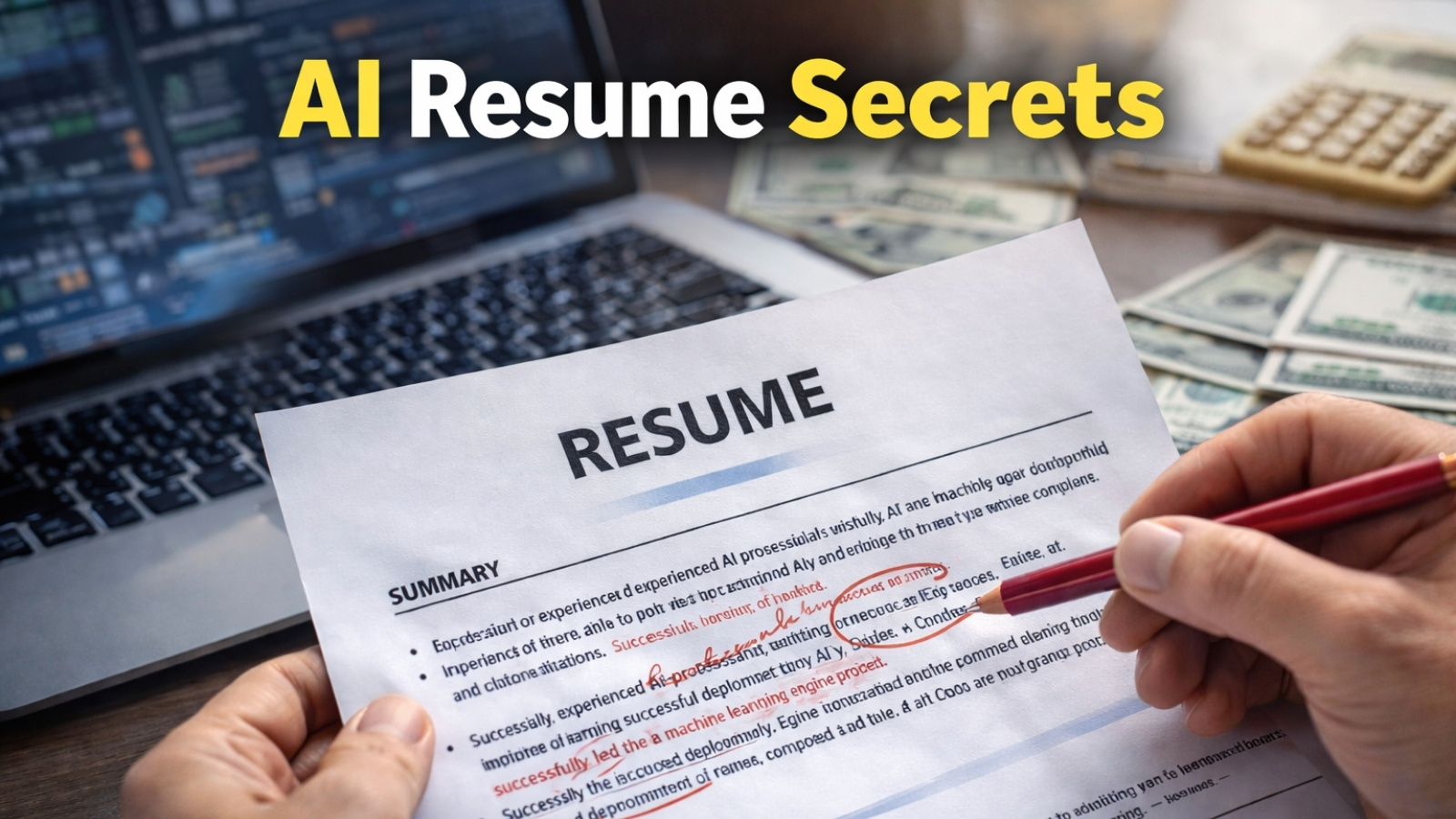
In today’s rapidly evolving landscape, having a strong AI resume is critical to landing your dream role. It is no longer enough to just list your skills and hope for the best. With thousands of applicants flooding the inboxes of recruiters at companies like OpenAI and Amazon, your application needs to do more than just exist; it needs to fight for you.
An effective AI resume that stands out is tailored, optimized, and crafted with a deep understanding of what both human recruiters and automated systems look for. If you are tired of sending applications into the void and never hearing back, this guide is for you. Let’s break down the top tips to get you shortlisted.
1. Beat the Robots (Tailor Your Application)
Here is a hard truth: before a human ever sees your application, a robot likely reads it first. These are called Applicant Tracking Systems (ATS), and they are the gatekeepers of the US hiring process. If your AI resume doesn’t contain the specific words they are programmed to find, you get rejected automatically.
One of the most important tips is to customize your AI resume for each specific job description. Sending a generic file is a waste of time.
-
Mirror the Language: If the job posting says “Natural Language Processing,” don’t just write “NLP.” Use the exact phrasing.
-
Align with Values: If the company emphasizes “ethical AI,” make sure you highlight that experience.
2. Show, Don’t Just Tell (Project Showcase)
Recruiters in the US love builders. They want to see what you have actually created. Whether you have worked on Kaggle competitions, built a personal stock predictor, or contributed to open-source libraries, these experiences are gold.
When listing projects on your AI resume, be specific. Don’t just say “Built a model.” Say, “Built a sentiment analysis tool using PyTorch that processed 50,000 user reviews with 92% accuracy.” Always include a link to your GitHub repository so they can see your clean code.
3. The Power of Keywords
We talked about the robots earlier. To keep them happy, optimizing the skills section of your AI resume is non-negotiable. This signals your familiarity with the essential tools of the trade.
-
Core Tech: Python, SQL, TensorFlow, PyTorch.
-
Specialties: Computer Vision, Generative AI, Large Language Models (LLMs).
-
Tools: Docker, Kubernetes, AWS, Azure.
Make sure these keywords flow naturally in your bullet points rather than just sitting in a lonely list at the bottom.
Also Read : AI Jobs for Beginners: Salaries, Roles and How to Get Hired
4. Don’t Forget Soft Skills
While technical skills are vital, US companies are obsessed with “culture fit.” They want to know if you can work in a team. An AI project is rarely a solo mission; it requires cross-functional teamwork with product managers and designers.
Your AI resume should highlight soft skills like “collaborated with cross-functional teams,” “communicated complex data to non-technical stakeholders,” or “led a team of three junior developers.” This shows you are a human, not just a coding machine.
5. Quantify Your Impact
Hiring managers often skim through applications in less than six seconds. You need to grab their attention with numbers. The American corporate world runs on data, so your AI resume should be data-driven too.
-
Bad: “Improved model accuracy.”
-
Good: “Improved model accuracy by 15%, resulting in a $50,000 annual saving in cloud compute costs.” See the difference? Numbers tell a story of success that words cannot.
6. Certifications Matter
The field of Artificial Intelligence moves at lightning speed. What was cutting-edge last year is obsolete today. Listing recent certifications on your AI resume shows that you are a continuous learner.
-
Top Picks: Coursera’s “AI For Everyone,” Udacity’s “Deep Learning Nanodegree,” or the Google TensorFlow Developer Certificate. These carry weight and show commitment.
7. The Summary: Your Elevator Pitch
Start your document with a short 2–3 sentence summary. This is your “elevator pitch.” It should highlight your strengths, goals, and what you bring to the table.
-
Example: “Passionate Machine Learning Engineer with 3 years of experience in building scalable NLP systems. Seeking to leverage my Python and AWS skills to solve real-world problems at a forward-thinking tech firm.” Placing this summary at the top of your AI resume ensures the recruiter knows exactly who you are right away.
Before you hit that “Submit” button, take a deep breath and review. Ask yourself: Is my AI resume personalized? Is it easy to read? Does it prove I can do the job?
Remember, this document is a marketing brochure for “Brand You.” It needs to be sharp, professional, and convincing. Taking the extra time to polish your AI resume is the best investment you can make for your future career. Good luck out there!
Also Read : AI Jobs for Non Coders: How to Earn $150k Without Python