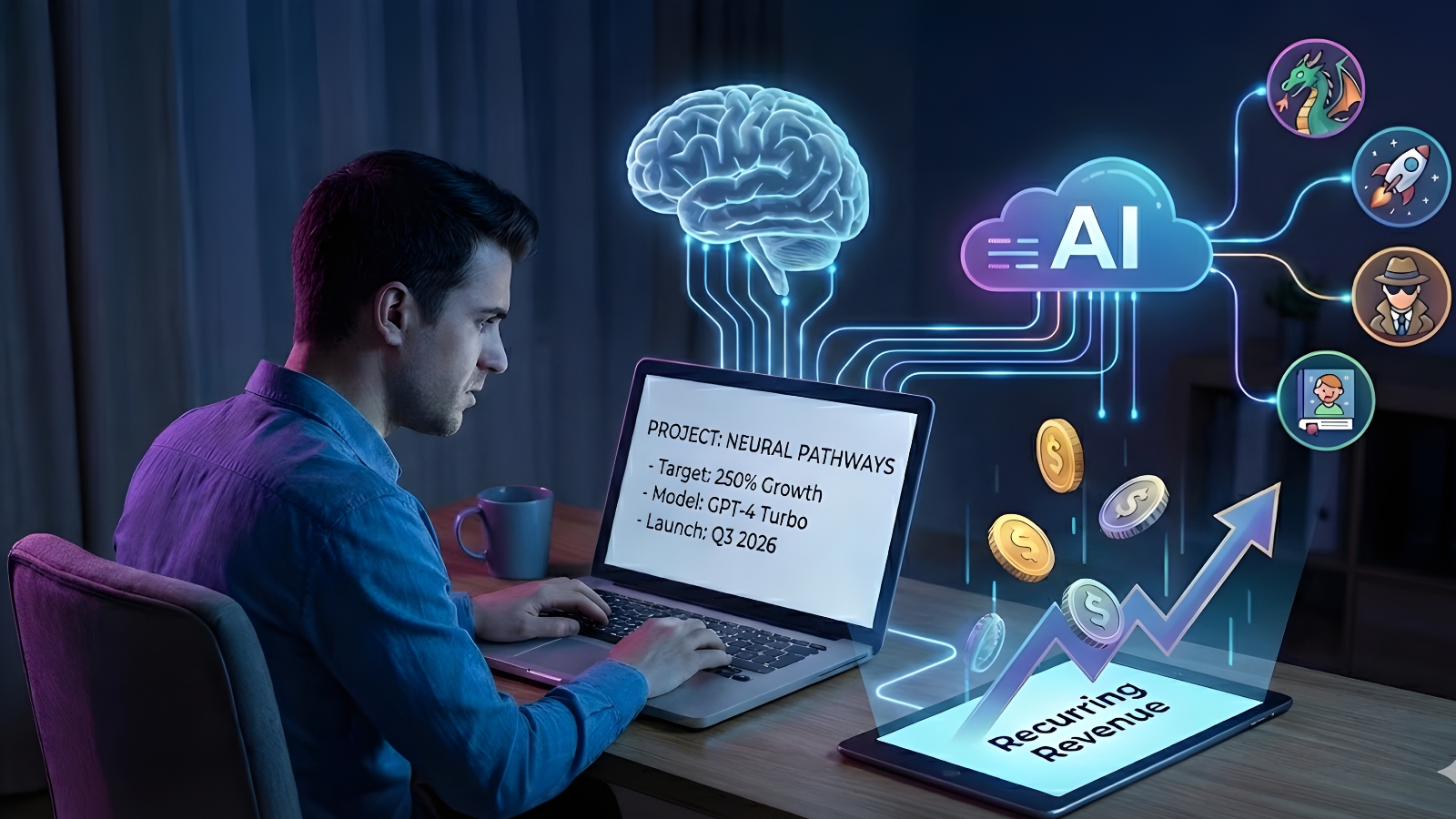
AI Character Generator: Building the Ultimate RPG Tool
The world of tabletop role-playing games (TTRPGs) like Dungeons & Dragons and Pathfinder is currently experiencing a golden age. Fueled by popular streaming shows and a desire for social connection, millions of players are gathering around tables (both physical and virtual) to tell stories. But every great story needs a cast, and creating that cast is the biggest bottleneck in the hobby. This is where an AI Character generator transforms from a fun novelty into a serious business opportunity.
For decades, players had to spend hours manually rolling dice, calculating modifiers, and writing backstories to build a single hero. Dungeon Masters (DMs) had it even worse, needing to invent dozens of Non-Player Characters (NPCs) for every session. By building a tool that uses artificial intelligence to instantly generate a deep, balanced, and compelling AI Character, you are solving the number one pain point in a billion-dollar industry.
The Problem: Creativity vs. Time
The core value proposition here is simple: “Infinite creativity in zero time.” A Dungeon Master might need a “grumpy dwarven blacksmith who hates elves” on the fly because their players decided to visit a random shop. Traditionally, the DM would have to pause the game and scramble to invent a name and personality.
With your tool, they click a button, and a fully fleshed-out AI Character appears. This character doesn’t just have a name; they have a distinct voice, a secret motivation, and a reason for being in that town. This keeps the game immersive and fluid. You aren’t replacing the DM’s imagination; you are acting as their improvisational co-pilot.
Niche Down: Specific Tools for Specific Needs
The market is hungry for specialized tools. A generic “fantasy generator” is okay, but a targeted solution is profitable.
1. The “Villain” Architect Every campaign needs a Big Bad Evil Guy (BBEG). Create a generator specifically designed to build complex antagonists. An AI Character generated here would come with a dark backstory, a twisted philosophy, a secret lair description, and legendary combat actions. DMs will happily pay for a “Villain Pack” that saves them weeks of prep.
2. The Visual Character Creator Text is powerful, but visuals sell. Integrate image generation APIs (like Midjourney or DALL-E) to auto-generate a portrait alongside the stat block. When a user creates a “Cyberpunk Hacker,” they get the stats and a high-resolution image to use as a token on virtual tabletops like Roll20 or Foundry VTT.
3. The “Backstory” Fixer Many new players love the combat aspect but struggle with roleplay. Build a tool where they input their class and race, and the AI Character engine spits out a tragic, heroic, or comedic 3-page backstory that integrates perfectly into the game world.
Also Read : AI Comic Strip: How to Launch a Webtoon Empire Without Drawing
The Business Model: Monetizing the Party
Gamers are known for investing heavily in their hobby. There are several ways to monetize this traffic.
-
The “DM’s Toolkit” Subscription: Charge a monthly fee (e.g., $5/month) for unlimited access. Subscribers get to generate unlimited characters, save them to a campaign folder, and export them as formatted PDF character sheets.
-
The Micro-Transaction Model: Offer the base stats for free, but charge for “Premium Assets.” For example, generating a high-res image or a “Level 20 Epic Stat Block” costs 1 credit.
-
Affiliate Ecosystem: Use your platform to recommend physical goods. If a user generates a Rogue AI Character, show them an affiliate link to a “Stealth Dice Set” or a miniature figure that matches their description.
Building the Tech Stack
You don’t need a massive team to build this. The logic of RPGs is math-based, which computers love, and the flavor is text-based, which LLMs love.
-
The Brain: Use OpenAI’s GPT-4 or Anthropic’s Claude to handle the creative writing. You can fine-tune the prompts to ensure the AI Character speaks in “fantasy vernacular” rather than modern corporate speak.
-
The Rules: Don’t rely on AI for the math (it’s bad at it). Hard-code the game rules (based on the Open Game License/SRD) into your backend using Python or Node.js. Use the AI for the flavor, and use code for the stats.
-
The Interface: A clean, mobile-responsive web app is essential. Many DMs run games from their iPads. A cluttered UI will kill your retention.
Marketing Your Generator
Community trust is everything in the TTRPG space.
-
Actual Play Sponsorships: Find smaller D&D streamers and offer them free access. If they use an AI Character from your tool during a live stream, their audience will immediately want to try it.
-
Reddit and Discord: Communities like r/DnDBehindTheScreen or r/UnearthedArcana are goldmines. Share a “Character of the Week” generated by your tool—something wild and funny—to show off the capabilities.
-
TikTok Lore: Create short skits acting out the bizarre personalities your generator creates. “My AI Character generator made a goblin who thinks he’s a wizard. Here’s what happened.”
The Future of Storytelling
We are moving toward a future where “dynamic storytelling” is the norm. An AI Character generator is just the first step. Soon, these characters will have their own chatbots, allowing players to converse with them in real-time. By building the foundation today, you are positioning yourself at the forefront of the next evolution of gaming—where the only limit is how fast you can dream.
Also Read : The Future of Fiction : How to Monetize an Adventure Story Generator