Why AI Generated Scripts Are the Real Entry Point
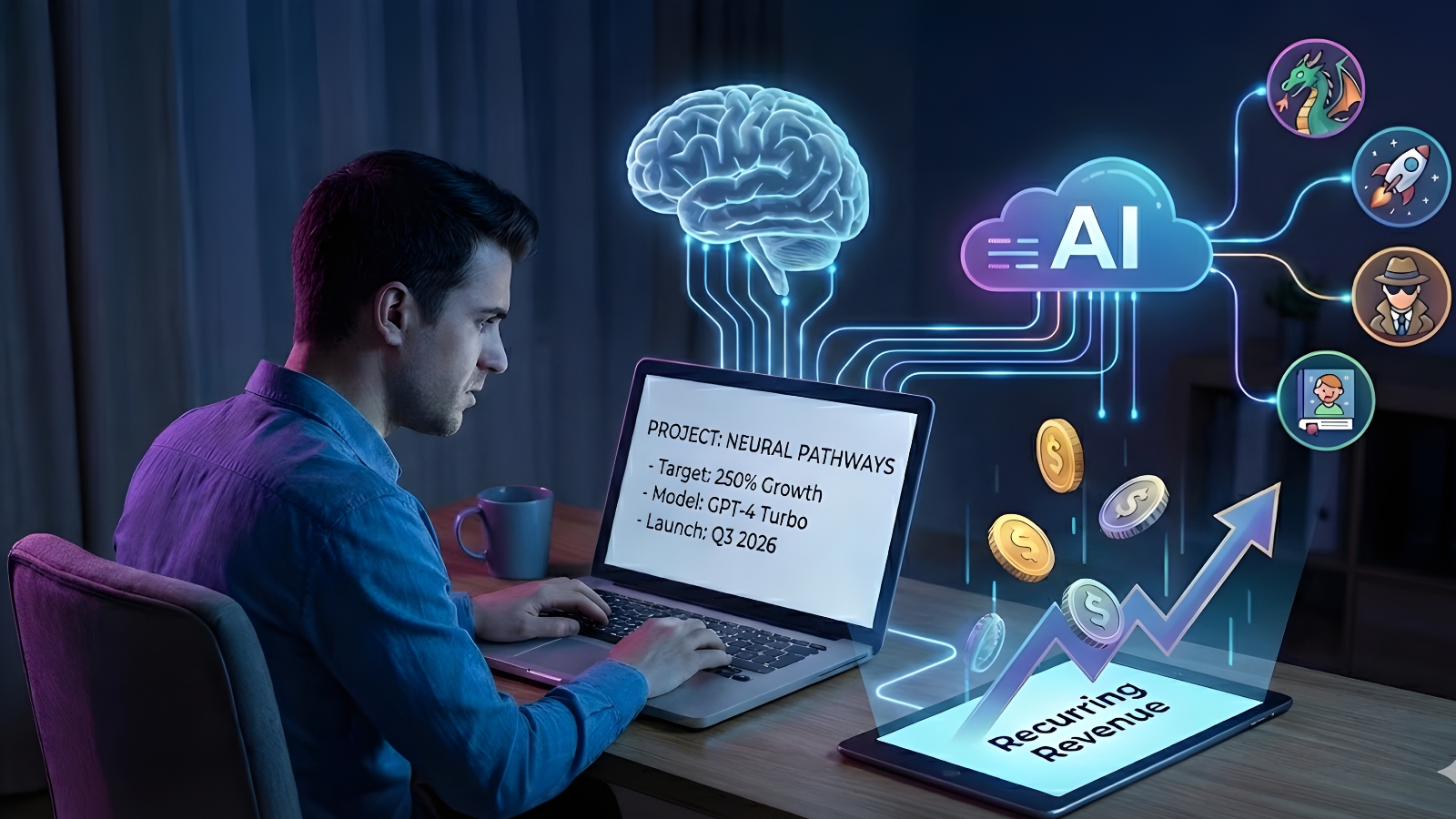
AI generated scripts are turning solo creators into filmmakers — and the short film boom they are fueling is creating income opportunities that did not exist 24 months ago.
Sundance 2026 featured AI-assisted films. Amazon is building an AI Studio for cinematic content. Curious Refuge, an AI film school, is training the next wave of Hollywood creators, according to Reuters. A three-minute narrative short film produced almost entirely with AI tools costs between $75 and $175 in 2026, according to MindStudio’s AI filmmaking cost breakdown. A traditional 15-minute short film might run $5,000 to $50,000. The AI alternative costs $200 to $800 — a 90 to 98% cost reduction.
The creators who understand how to monetize this shift are not just making films. They are building income streams from the scripting layer itself — selling AI generated scripts, offering scriptwriting services, licensing story packages, and teaching the workflow to the wave of filmmakers who want to enter this space but do not know where to start.
The Script Is Where Everything Begins
The script — specifically AI generated scripts — is not one step in the AI filmmaking pipeline. It is the foundation of every step that follows. Bad prompts for video generation come from weak scripts. Inconsistent characters come from scripts that did not define them clearly.
According to the complete AI filmmaking pipeline documented by DeepFiction in February 2026, Claude and ChatGPT handle three-act structure, Dan Harmon’s Story Circle, and Save the Cat beat sheets. You feed the tool a logline and get a full treatment back in minutes. The practical guidance: use AI to develop the story, test ideas, and handle formatting — while your voice and vision drive everything.
Quilty, a new AI platform launched in 2026 and covered by Variety, offers a proprietary “Quilty Score” that analyzes AI generated scripts across story and craft, commercial viability, cultural resonance, and production reality. A comprehensive script evaluation costs $49.99. The fact that a platform exists to score AI generated scripts commercially is the clearest signal that this has moved from experiment to industry.
Also Read : How a Story Generator Brilliantly Unlocks 4 Proven Fiction Income Streams in 2026
The 4 Income Streams That AI Generated Scripts Are Creating
Selling Script Packages to Indie Filmmakers
The most direct income path is producing and selling AI generated scripts as ready-to-shoot film packages targeted at indie filmmakers who want to make short films but cannot write. A complete short film package — a 5 to 15-minute script with shot list, character descriptions, scene breakdowns, and AI-generated storyboard frames — sells for $50 to $300 on Gumroad, Creative Market, and Payhip.
The buyer has Runway or Kling loaded on their laptop, has learned video generation, and needs story content to produce. That gap between technical production capability and storytelling capability is where the script package sells. A catalog of 20 AI generated scripts across genres — thriller, horror, comedy, drama, sci-fi — generates consistent passive income as indie filmmakers discover the products. Genre specificity matters: “5-Minute Horror Short Script for Solo Creators” outperforms generic listings because the buyer knows exactly what they are getting.
Freelance Script Development for AI Film Projects
On Upwork and Fiverr, AI scriptwriting and story development services for short film projects list at $50 to $200 per script, with packages including shot lists and storyboard prompts running $150 to $500. The clients are indie filmmakers who have learned video generation tools but need someone who understands how to structure a story within AI production constraints.
The specific knowledge that commands premium rates is understanding how AI generated scripts work within video generation constraints — keeping scenes short enough for consistent clip generation, designing characters with distinctive visual signatures that AI tools can maintain across shots, writing action lines that translate cleanly to video prompts. That production-aware scripting expertise is not taught in traditional screenwriting courses. It is learned by making AI films.
Teaching the AI Filmmaking Workflow
Jeffrey Katzenberg called this technology “the democratization of storytelling at a level that has never happened in the existence of humankind.” That democratization creates a teaching market — the hundreds of thousands of aspiring filmmakers who want to learn the workflow but need someone to explain it.
Online courses teaching the complete pipeline — from producing AI generated scripts through video generation, voice, music, and distribution — sell for $49 to $299 on Gumroad, Teachable, and Udemy. Workshops with live feedback on script development specifically sell at $97 to $497 per seat. The creators who have made AI short films and built an audience around the process are the ones whose courses convert — because the portfolio answers the credibility question before any testimonial does.
YouTube and Film Festival Distribution Revenue
AI-generated content performs well on YouTube, and the algorithm does not discriminate based on production method. Film festivals are accepting AI work — the AI Film Festival and Curious Refuge run dedicated competitions for AI-produced films. Sundance 2026 screened AI-assisted work.
A YouTube channel publishing AI short films with consistent genre, aesthetic, and narrative quality builds an audience the same way any niche channel does — through consistent output and discoverability. Monetization comes through the YouTube Partner Program, Patreon for viewers who want early access to scripts and behind-the-scenes process content, and direct course and product sales to the audience the films attract.
Also Read : Cross Sell Strategies Proven to Double Revenue — 7 AI Moves
The Tools That Power This Workflow in 2026
Claude and ChatGPT handle story development, structural analysis, and script formatting. Claude is specifically cited in the DeepFiction pipeline for its understanding of three-act structure and beat sheet methodology. For the full stack: Claude for AI generated scripts, FLUX or Midjourney for storyboard frames, Kling AI 2.0 for video generation at the best quality-to-cost ratio, ElevenLabs for voice narration at $5 per month, Suno for original music, and DaVinci Resolve for editing.
The minimum viable stack for a publishable three-minute short film costs $75 to $175 total. That is not a rough estimate — that is what working AI filmmakers are spending in 2026. The 10-minute short film that would have required a crew of twenty and a $50,000 budget can now be produced solo, from a laptop, in a weekend.
The short film boom is real, documented, and creating income at every layer of the production chain. AI generated scripts remain the foundation layer — the point where the story becomes a film, where the freelancer’s work becomes the filmmaker’s product. The window where AI generated scripts expertise is genuinely scarce is still open. Not for much longer.
Frequently Asked Questions
1. Can you sell AI generated scripts commercially in 2026?
Yes. Short film script packages sell on Gumroad, Etsy, and Creative Market for $50 to $300. Freelance script development on Upwork lists at $50 to $200 per script, with full shot list packages running $150 to $500.
2. How long does it take to write a short film script with AI?
A complete 5 to 15-minute script using Claude or ChatGPT takes 2 to 4 hours for someone familiar with the tools. First-timers should budget 6 to 8 hours including iteration and revision.
3. Are AI-assisted short films being accepted at film festivals in 2026?
Yes. Sundance 2026 screened AI-assisted films. The AI Film Festival and Curious Refuge run dedicated competitions for AI-produced work. Festival programmers are evaluating the story — not the production method.
Honestly — if you had a great short film idea right now, what genre would you want to make first?